Account
 Basket
 Home
Home Electric UFH
 Water UFH
 Plumbing
 Brands
 My Account
 Contact Us
 Charity
 Technical Hub
What Is Manifold Plumbing?
Manifold plumbing is a smart, modern way of distributing hot and cold water through a property or heating system. At its core, a plumbing manifold acts as a central control point, or hub, that sends water out to different zones, rooms, or appliances through dedicated pipe runs. This helps create a more efficient, balanced, and manageable system for both heating and domestic water supply.
Unlike many areas of building services, plumbing system design has not changed dramatically for decades. That said, manifold plumbing has been widely used in new-build heating installations for some time, particularly where small-bore pipework is used for radiator systems. It is also increasingly popular in domestic plumbing setups, where it offers clear benefits for taps, showers, bathrooms, kitchens, washing machines, and other appliances.
How Manifold Plumbing Works
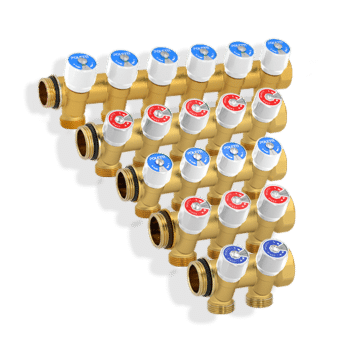
A manifold plumbing system distributes hot and cold water from a central manifold to each outlet individually. Instead of relying on long pipe runs with multiple branches and fittings, each appliance is connected directly back to the manifold. This creates a neat, organised layout with fewer connection points hidden beneath floors or above ceilings.
Because each pipe run is separate, every appliance can be isolated individually if needed. That means repairs, maintenance, and servicing are much easier, while the rest of the system can remain operational.
Benefits of Manifold Plumbing
One of the biggest advantages of manifold plumbing is individual flow control. If a fault develops at one appliance, that section can be isolated without affecting the rest of the property. This makes maintenance simpler and reduces disruption.
Another major benefit is the reduced number of fittings. In a traditional plumbing setup, a system can contain a large number of elbows, tees, and connectors. With manifold plumbing, pipework runs more directly from the manifold to the outlet, which can reduce potential leak points and improve overall system reliability.
Manifold systems also offer excellent design flexibility. Pipework can often be hidden more easily, creating a cleaner installation. In heating applications, they can also support zoning, room-by-room control, and better balancing of radiator circuits.
Domestic Manifold Plumbing
Domestic manifold plumbing offers major practical benefits for hot and cold water distribution. Each appliance receives its own dedicated pipe run, which means isolation for servicing is far easier and quicker. There is no need to struggle under a sink or behind a unit just to shut off one outlet.
This type of system can also support compliance with water regulations by allowing domestic pipes to be withdrawn when installed in conduit. In addition, pressure drops are often reduced because a larger header pipe supplies multiple outlets more effectively than a conventional branched layout.
Because fewer fittings are used, the system is often neater and more reliable. If the manifold is positioned closer to the rooms being served, hot water heat-up times can also improve, helping reduce water waste and improve user comfort.
Is Manifold Plumbing Worth It?
For many modern homes and heating installations, manifold plumbing is absolutely worth considering. It offers better control, easier maintenance, fewer hidden fittings, and a more efficient way to distribute water and heating circuits. Whether you are planning a new radiator system or a domestic hot and cold water setup, manifold plumbing can provide a more practical and future-proof solution.
If you are comparing traditional pipework with a manifold system, the benefits are clear: cleaner installation, easier isolation, improved control, and greater flexibility across the property.